Wednesday, 27 April 2016

Tuesday, 26 April 2016
Monday, 25 April 2016
Tuesday, 19 April 2016
Monday, 18 April 2016
Thursday, 14 April 2016
NME Magazine Advert Dimensions/Specification - Joshua Manley 9645
The link and image below illustrate the dimensions of the NME music magazine. This allows me to gain an understanding of the layout and dimensions needed to be able to publish my product and therefore I will conform the these measurements to make the adverts practical and realistic.

Monday, 11 April 2016


Wednesday, 2 March 2016
Progression from rough cut to final cut - Kieran Panchal 9652
From scrutinising the rough cut that we produced, we found that there were many post-production based improvements that could be made in order to improve the music video's aesthetic and narrative. Whilst some of these improvements were instigated by comments from participants of our focus group, there were many that we decided upon as a partnership after re-watching our rough cut as well as additional cuts after this and finding areas for improvement. Below the main changes and the reasons for these changes are explained.
Firstly, we decided to artificially adjust the aspect ratio of our video in order to create the impression that the footage was filmed in widescreen (at approximately 1.85:1). We decided that this would be necessary in order to create a more cinematic feel to our music video, which we felt would aid in creating an immersive atmosphere, which was one of our main initial goals. We created this widescreen impression by implementing two black bars above and below the central image, as would be seen if watching a film shot with a cinema aspect ratio on a home video system for example.


Next, after considering feedback provided from our focus group, we considered it imperative that we carry out a colour grading and correction process. We did this in order to give the video a seamless feel, improving the flow, and making it fit together in its entirety, aiding to create the impression of a product as a whole rather than a series of individual shots or scenes. Furthermore, this gave us the opportunity to use colour to create mood and tone. For example, we desaturated much of the footage in order to give many shots a bleak and moody feel, this aided us in creating a desolate atmosphere increasing the sympathy that is felt for the character. We did this by using a variety of the colour correction tools within Premiere Pro, such as the Three-Way Colour Wheel, the Colour Balance Tool, the Shadows/Highlights tool and the Brightness and Contrast Effect.


Firstly, we decided to artificially adjust the aspect ratio of our video in order to create the impression that the footage was filmed in widescreen (at approximately 1.85:1). We decided that this would be necessary in order to create a more cinematic feel to our music video, which we felt would aid in creating an immersive atmosphere, which was one of our main initial goals. We created this widescreen impression by implementing two black bars above and below the central image, as would be seen if watching a film shot with a cinema aspect ratio on a home video system for example.


Next, after considering feedback provided from our focus group, we considered it imperative that we carry out a colour grading and correction process. We did this in order to give the video a seamless feel, improving the flow, and making it fit together in its entirety, aiding to create the impression of a product as a whole rather than a series of individual shots or scenes. Furthermore, this gave us the opportunity to use colour to create mood and tone. For example, we desaturated much of the footage in order to give many shots a bleak and moody feel, this aided us in creating a desolate atmosphere increasing the sympathy that is felt for the character. We did this by using a variety of the colour correction tools within Premiere Pro, such as the Three-Way Colour Wheel, the Colour Balance Tool, the Shadows/Highlights tool and the Brightness and Contrast Effect.


Following this, we noticed that some of our footage was not particularly steady or stable, which not only was a distraction for those watching our product, but it also appeared to reduce the professionalism and credibility of the video. In addition, it reduced the smooth and sombre aesthetic that we were looking to create. We found that one way to reduce this was by using the Warp Stabiliser Effect. However, we had to utilise this cautiously, as it had the tendency to warp some footage disproportionately. In order to counter this, we had to choose clips that were not overly unsteady, and shots that showed a clear subject and background, so that any warping was not obvious.

Another area for improvement mentioned in the focus group was the use of static shots following handheld shots, particularly in the performance-based final scene. After reviewing this criticism, we found this to be true, and fixed shots appeared to be hindering the flow and energy of some sequences, which is what we wanted to capture, as the movement in this scene expressed the character's release and sense of relief. Rather than removing these shots from the edit as suggested, we decided that we would incorporate movement into the mentioned shots, making them fit in within the scene better. We used timescaled, progressive movements such as zooms and pans using the motion effects also found within the software.

After this, we attempted to create a smooth transition/distinction between the narrative and performance scenes, as we found that in our rough cut, the drum performance did not create the impact and surprise that we initially attempted to create. We considered the best way to do this was to simply cut to black, leaving a black screen for a few seconds as the music stops. We then cut straight back into the scene, at the same time as the music in order to create impact. Also to create impact and a feeling of a build in tension, we edited the pacing of the sequence prior to the emergence of the smoke. We did this by using a greater number of clips in the sequence each for shorter durations. We feel like this has improved the cut significantly, and increases the dramatic effect and suspense a great deal.
Monday, 29 February 2016
Focus Group - Rough Cut Audience Feedback - Joshua Manley 9645 and Kieran Panchal 9652
After producing a rough cut for our video, we decided to conduct a focus group. We figured that this would be a good opportunity to not only gain some feedback from our target audience, but also observe the reactions of an audience watching our product for the first time. We ensured to choose four participants who fit into the bracket of our target audience (we deduced this from observing the initial research questionnaires that we preliminarily carried out upon deciding upon the initial idea). Furthermore, we decided to show the audience our rough cut rather than waiting until the final product was complete, as this allowed us time to consider the feedback that we were given and then incorporate it it in our final cut if we felt necessary and appropriate. This proved to be a particularly worthwhile task as the feedback given was useful and the advice was almost entirely transferrable into our music video project. From carrying out this focus group the main points in terms of improving the piece are as follows:
- Additional stabilisation is needed
- A colour grade is needed
- The pace of editing should be adjusted in order to fit the song's tempo
- The drums should be more accurately synchronised to the soundtrack
- More careful consideration of diegetic sounds needed (helicopter)
- Improve shot decisions in order to ensure continuity throughout
- Further consideration of the transition between the narrative and performance scenes needed
- Consideration of the use of static shots next to shots that incorporate movement
We will try to amend each of these issues when improving our edit. In addition, we felt it was important to gauge some opinions regarding some positive aspects of our music video. This allowed us to consider whether we were on track to achieve what we desired, in particular, an immersive experience for the viewer. Our audience feedback so far suggests that we have achieved this.
Friday, 26 February 2016
Thursday, 21 January 2016
Visual Storyboard - Joshua Manley 9645
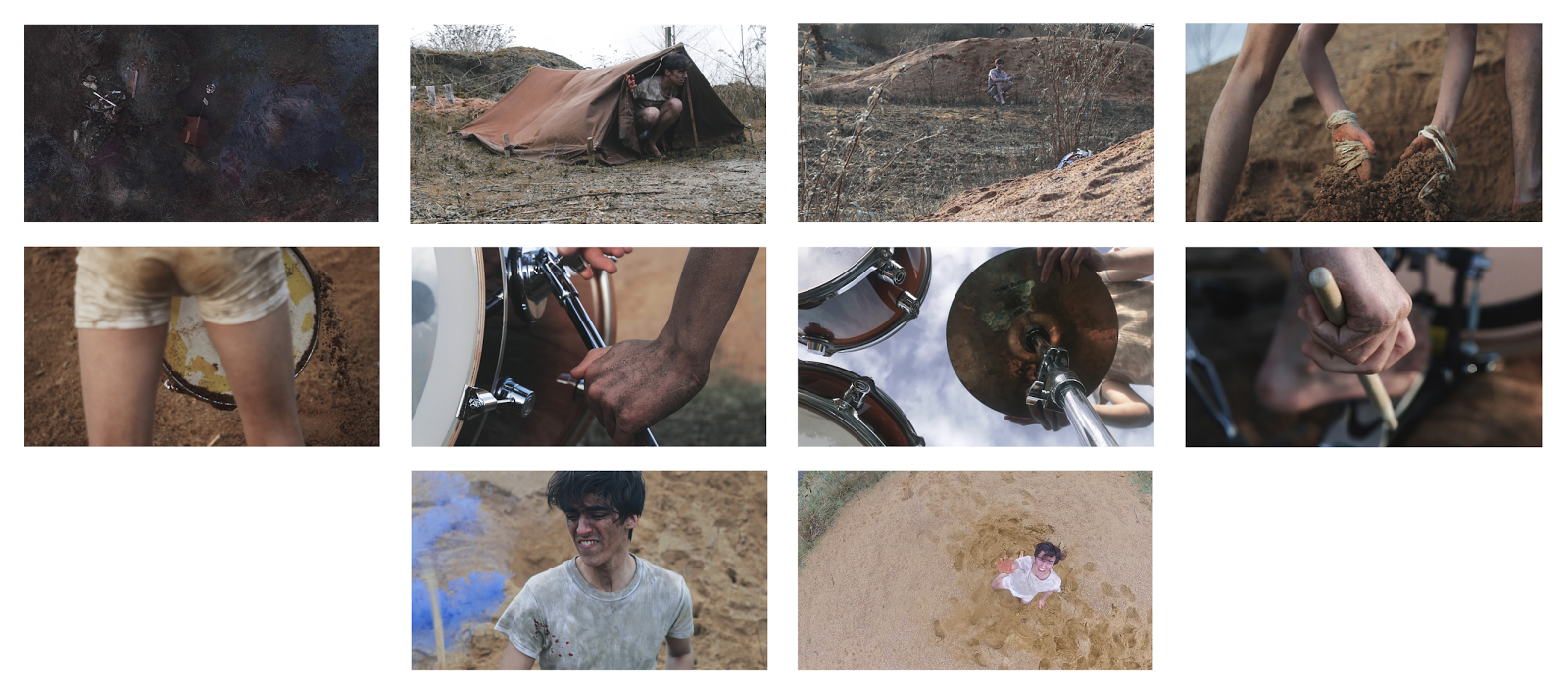
Wednesday, 20 January 2016


Monday, 4 January 2016


Sunday, 3 January 2016


Monday, 21 December 2015

Friday, 18 December 2015
Drone Usage Regulation - Kieran Panchal 9652
http://www.quadcopters.co.uk/caa-pfaw-guide-30-w.asp
When we film, we plan to use a Drone in order to shoot aerial images. By doing this, we will ensure to follow the guidelines provided by the Civil Aviation Authority, as follows.
"In order to make sure UAVs (Unmanned Aerial Vehicles) and manned aircraft are working in separate airspace, there are a number of limitations placed on UAV use. The rules below are subject to change by the CAA so it is worth noting that its best to check on there official website for upto date rules and regulations.
These are the main ones to keep in mind:
• The maximum altitude is 400 feet (120 metres)
• The maximum distance from the operator is 500 metres
• The minimum visibility needs to be 5 km
• UAV must be flown in line of sight of the operator
• UAVs cannot be flown at night without special permission
• Permission must be obtained from the owner of the take-off point
• UAVs cannot be flown within 50 metres of structures, vehicles or people that are not under the control of the person in charge of the aircraft. The rules are different for different weight classes unless a exemption is obtained.
It is perfectly acceptable to fly close to buildings and actors, for example, as long as permission has been obtained and the actors have been briefed about the use of the UAV. It would be highly irresponsible to fly over or near members of the public who are not aware of the purpose of the flight."
Furthermore, the drone has been registered by the owner and the permission of the actor has been obtained through the signing of the talent release document.
Thursday, 17 December 2015
Talent Release Document - Joshua Manley 9645 and Kieran Panchal 9652


The completed Talent Release document above certifies that our talent 'Hayden Miller' agrees to all of the conditions of the shoot and is willing to participate as a talent on both December 21st 2015 and December 23rd 2015.
Subscribe to:
Posts (Atom)